Tackling Contrails Could Avoid 10 Years of Aviation-Related Climate Warming — New Research
Tackling Contrails Could Avoid 10 Years of Aviation-Related Climate Warming — New Research
Introduction
Contrails—those thin, white streaks that linger behind aircraft—are emerging as a hidden but powerful driver of climate change. A new report from Klima Consulting, commissioned by Transport & Environment and authored by former IPCC scientist Olivier Boucher, argues that eliminating contrails could offset a decade’s worth of aviation‑related warming. The study reframes the climate debate around aviation, showing that the industry’s impact extends far beyond CO₂ emissions alone.
What Happened
The research quantifies contrail‑induced warming as roughly equal to the warming caused by aviation’s CO₂ output, even though only a modest fraction of flights generate persistent contrails. By analysing flight data, atmospheric conditions, and radiative forcing, the authors demonstrate that targeted interventions—such as adjusting flight levels or routes—could dramatically cut this hidden source of heat.
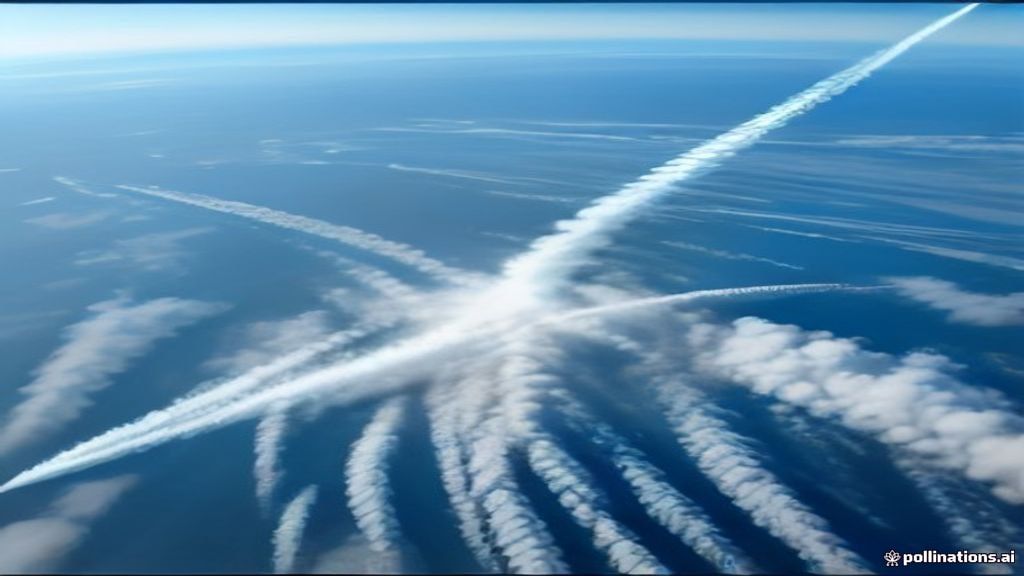
Contrails form when hot, moist exhaust from jet engines meets the frigid, low‑pressure air of the upper troposphere, causing water vapor to freeze into ice crystals. These ice crystals spread, creating thin cirrus‑like clouds that trap infrared radiation. When they persist for hours, they act like a thin blanket, amplifying the greenhouse effect and contributing to global warming.
Key Details
The report identifies a small subset of flights—primarily long‑haul routes over regions with favorable temperature and humidity profiles—as responsible for the bulk of contrail‑related warming. By rerouting these flights to avoid the most conducive atmospheric layers, the aviation sector could reduce contrail formation by up to 70 percent, according to the authors’ modelling.
Technological solutions also feature prominently. Next‑generation engines that emit cooler exhaust, alternative fuels that produce less water vapor, and onboard sensors capable of predicting contrail‑forming conditions are all under development. The authors stress that a combination of operational changes and innovation will be required to achieve the projected climate benefits.
Background
Aviation’s contribution to climate change has traditionally been measured in CO₂ emissions, which account for about 2‑3 percent of global anthropogenic greenhouse gases. However, the Intergovernmental Panel on Climate Change (IPCC) has long warned that non‑CO₂ effects—including contrails, induced cirrus, and nitrogen oxides—could add another 5‑10 percent to aviation’s total climate impact. The new study brings that warning into sharper focus by providing concrete mitigation pathways.
Historically, contrails received limited regulatory attention because they are a transient, visual phenomenon rather than a direct emission. Yet satellite observations over the past two decades have revealed that persistent contrail‑induced cirrus now cover millions of square kilometres, especially along busy trans‑Atlantic and trans‑Pacific corridors. This growing footprint underscores the urgency of integrating contrail mitigation into broader climate policies.
Why It Matters
If the aviation industry can curb contrail formation as the report suggests, the resulting climate benefit would be equivalent to eliminating a decade of CO₂‑driven warming from air travel. This is a substantial offset, especially as global air traffic is projected to double by 2050. Addressing contrails therefore offers a near‑term lever to meet the sector’s net‑zero ambitions without waiting for a full fleet turnover.
Beyond the climate calculus, reducing contrails could improve air quality and visibility, delivering ancillary health and economic benefits for communities beneath major flight paths. Moreover, the visibility of contrails makes them an accessible communication tool for the public, helping to raise awareness about aviation’s broader environmental footprint.
What Happens Next
Policymakers are expected to translate these findings into actionable regulations. Potential measures include mandating contrail‑avoidance flight planning, incentivising airlines to adopt low‑impact engine technologies, and establishing international standards for contrail reporting. Collaborative frameworks involving airlines, air‑traffic controllers, and meteorological services will be essential to operationalise these changes.
Research and development will also accelerate. Funding streams are likely to prioritize high‑impact technologies such as real‑time contrail prediction algorithms, fuel additives that reduce water‑vapor output, and aerodynamic designs that lower exhaust temperature. As these innovations mature, they could be rolled out across new aircraft models, creating a virtuous cycle of emission reductions and climate benefits.
Conclusion
The Klima Consulting report reframes the climate challenge for aviation by spotlighting contrails as a potent, yet tractable, source of warming. By targeting the small group of flights that generate the most persistent contrails and by investing in both operational and technological solutions, the industry can avert roughly ten years of climate damage. As air travel continues to expand, integrating contrail mitigation into the broader sustainability agenda will be crucial for achieving a truly low‑carbon future in the skies.
📖 See Also
📚 Sources & Attribution
- ✓ CleanTechnica News