Satanic Temple can host holiday celebration at state Capitol building, judge rules
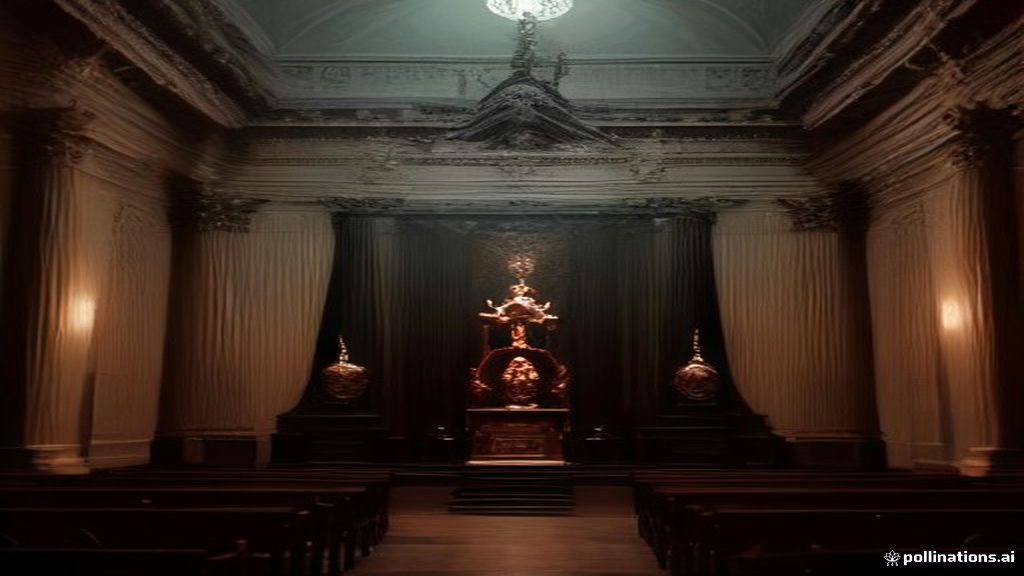
The Iowa Supreme Court’s recent decision allowing the Satanic Temple to hold a family‑friendly holiday celebration inside the state Capitol has sparked a fresh debate over religious freedom, government neutrality, and the limits of public‑space usage. While the ruling reaffirms the constitutional principle that the state cannot favor one belief system over another, it also raises practical questions about how public venues accommodate diverse, and sometimes controversial, expressions of faith during widely observed seasonal events.
What Happened
On Tuesday, a Des Moines district court judge issued an injunction ordering Iowa’s Capitol facilities to permit the Satanic Temple to host its “Holiday Celebration” in the Capitol’s public meeting rooms, without imposing any conditions or restrictions beyond those applied to other groups. The ruling came after the organization sued the state, arguing that officials had unlawfully denied them access that had been granted to Christian, Jewish, and Muslim groups for their own holiday observances.
The judge ruled that the state’s refusal violated the Iowa Constitution’s guarantee of free exercise of religion and the federal Establishment Clause, which together require the government to remain neutral toward all faiths. By denying the Satanic Temple the same opportunity afforded to other religious groups, the state had effectively shown preference for certain belief systems, a practice the court said could not stand.
Key Details
The court’s order specifically mandates that the Capitol’s Office of the Secretary of State must provide the Satanic Temple with a reservation for a public space on the same terms offered to any other organization requesting a holiday event. This includes access to a conference room, basic audiovisual equipment, and the ability to display symbols and decorations that are consistent with the group’s beliefs, provided they do not threaten public safety or disrupt the operations of the Capitol.
State officials had previously cited concerns about “public perception” and potential backlash from citizens who might find a Satanic event offensive. However, the judge rejected these arguments, noting that the Constitution does not allow the government to make policy decisions based on anticipated public reaction. The ruling also clarified that any restrictions must be content‑neutral, such as limits on noise levels or capacity, rather than targeting the religious nature of the event.
Background
The Satanic Temple, a nontheistic organization that uses Satanic imagery to promote secularism, religious liberty, and the separation of church and state, has a history of challenging perceived government favoritism toward Christianity. In recent years, the group has sought to place its own holiday displays alongside traditional Christmas trees and menorahs in public spaces, arguing that if one faith is given a platform, all must be treated equally.
Iowa’s Capitol has previously hosted a variety of faith‑based events, including a Christmas tree lighting organized by the state’s Department of Education, a Hanukkah menorah ceremony hosted by the Jewish Community Center, and an interfaith prayer service during Ramadan. When the Satanic Temple requested a similar slot for its holiday celebration, state officials denied the request, prompting the legal battle that culminated in the current ruling.
Why It Matters
The decision underscores the ongoing tension between the principle of religious neutrality and the practical realities of public sentiment. For advocates of church‑state separation, the ruling is a victory that reinforces the idea that government spaces must be open to all faiths, even those that are unpopular or misunderstood. It sends a clear message that the state cannot selectively grant access based on the majority’s comfort level.
Conversely, the case has ignited a backlash among some Iowa residents and legislators who view the Satanic Temple’s presence as an affront to traditional values. Lawmakers have introduced proposals to tighten the criteria for using Capitol facilities, arguing for “reasonable” restrictions that could, in effect, limit the ability of controversial groups to secure the same access. The debate highlights how legal rulings can prompt legislative responses that test the boundaries of constitutional protections.
What Happens Next
The state’s Office of the Secretary of State is now tasked with coordinating the logistics of the Satanic Temple’s holiday celebration, which is slated for early December. The organization has indicated it will feature a “Winter Solstice” ceremony, inclusive of music, a reading of secular holiday poems, and a symbolic “black candle” lighting meant to represent the triumph of reason over superstition. The event will be open to the public, with the expectation that families can attend without encountering any form of discrimination.
Legal experts predict that the ruling could set a precedent for future cases involving other minority faiths seeking access to public venues. Advocacy groups on both sides are likely to monitor the Capitol’s handling of the event closely, ready to file additional lawsuits if they believe the state imposes de facto restrictions. Meanwhile, the Iowa Legislature may revisit its policies on the use of public spaces, potentially crafting new guidelines that attempt to balance constitutional obligations with community sensitivities.
In the end, the judge’s decision reaffirms a core tenet of American democracy: that the government must treat all religions, even those that challenge mainstream norms, with equal respect. Whether Iowa’s Capitol will become a stage for a truly inclusive holiday season or a flashpoint for cultural conflict remains to be seen, but the ruling ensures that the conversation about religious freedom will continue to be heard, loud and clear, within the very walls of the state’s most symbolic building.
📖 See Also
📚 Sources & Attribution
- ✓ ABA Journal