How the ‘first bird’ leapt into the sky and soared above the dinosaurs
Introduction
The tale of the first bird is a cornerstone of evolutionary science, illustrating how a lineage of ground‑dwelling dinosaurs gave rise to the feathered masters of the sky. Central to this narrative is Archaeopteryx, a fossil discovered in the limestone cliffs of Solnhofen, Germany, in 1861. Long celebrated as a “missing link,” Archaeopteryx embodies the blend of reptilian and avian traits that marks the transition from dinosaurs to modern birds. This article follows the flight of that ancient pioneer, detailing the events, specifics, context, and lasting significance of its ascent above the Jurassic world.
What Happened
Roughly 150 million years ago, during the Late Jurassic, the Earth was dominated by towering sauropods, ferocious theropods, and sprawling fern‑filled forests. Within the theropod clade—a group of bipedal carnivores—some lineages began to sport simple filamentous feathers, likely initially for insulation or display. Over successive generations, natural selection favored individuals whose feathered limbs could generate lift, allowing brief glides from tree branches.
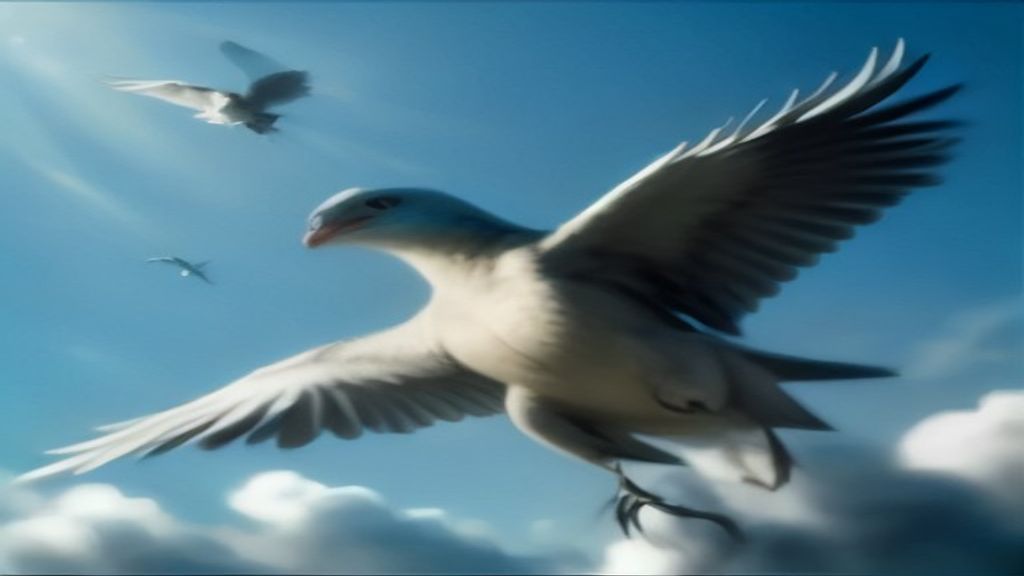
Archaeopteryx, whose name means “ancient wing,” represents the point at which these incremental adaptations coalesced into a functional aerial apparatus. Its fossils reveal a creature capable of controlled aerial descent, perhaps akin to modern gliding squirrels or the “parachuting” behavior seen in some juvenile birds. This ability would have opened new ecological niches, granting access to food sources and escape routes unavailable to strictly terrestrial predators.
The evolution of true powered flight likely proceeded in stages. Early Archaeopteryx may have relied on a combination of wing flapping and passive soaring, gradually refining muscle attachment sites, feather asymmetry, and skeletal lightening. Each incremental improvement would have been reinforced by selective pressures—predation avoidance, foraging efficiency, and reproductive advantage—culminating in the fully powered flight seen in later avian ancestors.
Key Details
Archaeopteryx measured about 0.5 m (1.6 ft) in length and weighed roughly 1 kg (2.2 lb), placing it in the size range of a modern pigeon. Its body was covered in a mosaic of feathers: long, asymmetrical flight feathers on the forelimbs, symmetrical down‑like feathers on the tail and neck, and a covering of filamentous “proto‑feathers” on the legs. The presence of true flight feathers—rigid, vaned structures capable of generating lift—distinguishes it from earlier feathered dinosaurs.
The skeletal anatomy underscores its transitional nature. Archaeopteryx possessed a wishbone (furcula) that acted as a spring during wing beats, a hallmark of modern birds. Its forelimbs ended in three clawed digits, the second of which was the longest and bore a sharp claw, suggesting a retained ability to grasp prey or perch. Meanwhile, its pelvis and hindlimb proportions remained dinosaurian, and it retained a long, bony tail with over 20 vertebrae, unlike the short pygostyle of contemporary birds.
Perhaps most striking is the bone structure: hollow, pneumatic bones reduced overall mass without sacrificing strength, a critical adaptation for flight. The combination of lightweight skeleton, aerodynamic feathers, and muscular forelimbs provided the mechanical foundation for Archaeopteryx’s aerial excursions.
Background
The broader picture of avian evolution is painted by a suite of Jurassic and Cretaceous fossils that bracket Archaeopteryx in time and form. Earlier theropods such as Coelophysis and Dilophosaurus showed no feathers, while later forms like Microraptor and Anchiornis exhibited four‑winged configurations, suggesting multiple experimental pathways toward flight. These discoveries have refined the view that feathered locomotion evolved in a mosaic fashion, with different lineages exploring gliding, parachuting, and flapping in parallel.
Archaeopteryx inhabited a warm, humid world of coniferous forests, lagoons, and volcanic islands. The Solnhofen lagoon, where its fossils were preserved, was a shallow, anoxic basin that limited scavenger activity, allowing delicate feather impressions to fossilize. This environment not only facilitated preservation but also offered abundant arboreal habitats, providing the structural platforms necessary for the evolution of gliding and, eventually, powered flight.
Why It Matters
Archaeopteryx serves as a tangible, anatomical bridge between non‑avian dinosaurs and birds, confirming Darwinian predictions about transitional forms. Its mixed suite of traits validates the concept that major evolutionary leaps—such as the origin of flight—can arise through the gradual accumulation of small, functional modifications rather than abrupt, wholesale changes.
Beyond its historical importance, Archaeopteryx informs modern biology and engineering. Understanding the biomechanics of its wing structure and feather arrangement aids in the design of bio‑inspired drones and micro‑air vehicles. Moreover, its evolutionary story underscores the role of exaptation—where features evolve for one purpose (e.g., insulation) and later acquire a new function (flight)—a principle that resonates across evolutionary studies.
What Happens Next
Current research leverages high‑resolution CT scanning, synchrotron imaging, and computational fluid dynamics to reconstruct the flight capabilities of Archaeopteryx with unprecedented precision. These techniques allow scientists to model airflow over reconstructed wing surfaces, estimate muscle mass, and test hypotheses about gliding versus flapping performance.
Future fossil discoveries, especially from under‑explored Jurassic deposits in Asia and South America, may reveal intermediate forms that fill remaining gaps between basal theropods and true birds. As new specimens emerge and analytical methods improve, the narrative of how the first bird took to the skies will become ever more detailed, refining our understanding of one of nature’s most spectacular innovations.
Conclusion
Archaeopteryx stands as a living illustration of evolution in action—a creature that combined the skeletal framework of a dinosaur with the aerodynamic toolkit of a bird. Its ascent into the Jurassic skies marked the birth of a lineage that would eventually dominate ecosystems worldwide, from the tiniest hummingbird to the mightiest albatross. By studying this ancient pioneer, scientists not only trace the origins of flight but also gain insight into the broader mechanisms that drive life's endless capacity for change and adaptation.
📖 See Also
📚 Sources & Attribution
- ✓ The Conversation News