This company wants to stop underwater drones and even submarines with a whole new form of sonar technology
Introduction
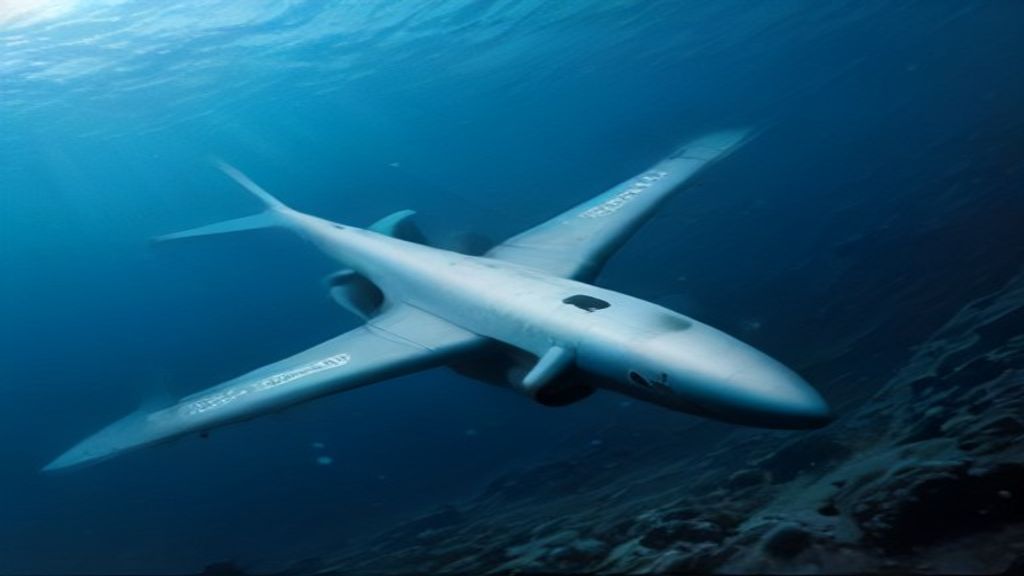
The ocean’s silent depths are rapidly becoming a contested battlefield, as unmanned underwater vehicles (UUVs) and autonomous drones slip beneath the surface with little acoustic signature. To counter this emerging threat, a private‑sector firm has unveiled a groundbreaking sonar system that pairs a passive “listening” sensor with an active “ping” unit. By first detecting a target covertly and then illuminating it with a focused acoustic pulse, the technology promises to give the U.S. Navy a decisive edge in spotting hostile drones and even traditional submarines before they can approach critical shore installations.
What Happened
Earlier this year the company—identified in public filings as Groq Technologies—demonstrated a prototype that combines two distinct sonar modalities into a single, coordinated system. In a controlled test off the coast of California, the passive sensor sat idle, listening for the faint acoustic disturbances generated by a small, battery‑powered underwater drone. When the sensor’s algorithms identified a likely target, it automatically triggered a second, high‑frequency active sensor to emit a short, directional ping aimed at the suspect object.
The echo returned from the ping was then processed in real time, delivering precise range, bearing, and velocity data to a command console. Navy analysts watching the trial reported that the system could locate a 30‑centimeter drone at distances exceeding 2,000 meters—far beyond the reach of conventional passive arrays, which often miss such low‑signature platforms entirely.
Following the successful demonstration, the Navy’s Office of Naval Research (ONR) announced a preliminary partnership with Groq to accelerate field testing on board surface combatants and littoral patrol vessels. The goal is to integrate the dual‑sensor suite into existing combat systems, allowing ships to “listen first, fire second” without compromising their own acoustic stealth.
Key Details
The core of the technology lies in its sensor pairing. The passive element is a broadband hydrophone array tuned to capture a wide spectrum of low‑frequency noises—engine hum, propeller cavitation, and even the subtle sounds of a drone’s motor and control surfaces. Advanced machine‑learning classifiers sift through the ambient ocean noise, flagging patterns that match known threat signatures while ignoring marine life and benign traffic.
Once a candidate is identified, the system’s active component—a compact, high‑power transducer—fires a narrow‑beam acoustic pulse at a frequency optimized for the target’s size and material composition. Because the ping is highly directional and of short duration, it minimizes the chance of revealing the host vessel’s position while still providing a clear echo for triangulation.
Data from the echo are fused with the passive sensor’s initial detection, producing a high‑resolution track that can be handed off to other shipboard sensors, such as towed arrays or magnetic anomaly detectors. The entire process, from silent detection to active ping, occurs in under two seconds, enabling rapid response to fast‑moving threats.
Background
In recent years, adversaries have invested heavily in inexpensive, low‑observable UUVs capable of conducting reconnaissance, mine‑laying, or even delivering payloads against high‑value maritime assets. Traditional sonar suites—whether passive or active—struggle to maintain coverage against swarms of such devices, especially in congested littoral zones where background noise is high and acoustic propagation is complex.
The U.S. Navy has responded with a series of initiatives, from deploying dedicated anti‑UUV patrol boats to experimenting with underwater laser detection. However, many of these solutions either sacrifice stealth (as with continuous active sonar) or lack the resolution needed to discriminate small, quiet drones from marine fauna. Groq’s dual‑sensor approach seeks to bridge that gap by leveraging the strengths of both passive and active sonar while mitigating their individual weaknesses.
Why It Matters
Effective detection of underwater drones is not merely a tactical convenience; it is a strategic necessity. A single hostile UUV can breach harbor defenses, sabotage critical infrastructure, or deliver a lethal payload to a warship at anchor. By providing early warning and precise tracking, the new sonar system enhances force protection, safeguards commercial ports, and preserves freedom of navigation in contested waters.
Beyond immediate defense, the technology signals a broader shift toward intelligent, sensor‑fused maritime surveillance. The ability to autonomously decide when to remain silent and when to emit a ping reduces the acoustic footprint of naval vessels, preserving their own stealth while still maintaining situational awareness. This paradigm could reshape how navies balance detection capability with operational security in the underwater domain.
What Happens Next
Groq and the Navy plan a series of sea trials over the next 12 months, installing the dual‑sensor package on a destroyer and a littoral combat ship operating in the Pacific and Atlantic test ranges. These trials will evaluate performance against a variety of targets, including small commercial ROVs, larger autonomous submarines, and even biologically inspired bio‑mimetic drones that emulate marine animal sounds.
Should the trials confirm the system’s promised detection ranges and low false‑alarm rates, the ONR intends to move toward low‑rate initial production (LRIP) and eventual integration across the surface fleet. Parallel research efforts are already exploring miniaturized versions for deployment on unmanned surface vessels (USVs) and fixed offshore platforms, extending the protective umbrella beyond manned warships.
Conclusion
The emergence of a sonar system that first listens in silence and then pings only when a threat is identified could fundamentally alter underwater security dynamics. By marrying passive acoustic vigilance with targeted active interrogation, Groq’s technology offers the U.S. Navy a potent tool to detect, track, and neutralize the growing menace of underwater drones and stealthy submarines. As testing progresses and the system moves toward fleet‑wide adoption, the oceans may become a little less opaque for those tasked with defending them, ensuring that the silent depths no longer provide a safe haven for hostile actors.
📖 See Also
📚 Sources & Attribution
- ✓ TechRadar TVs