The progress of a Blood Moon
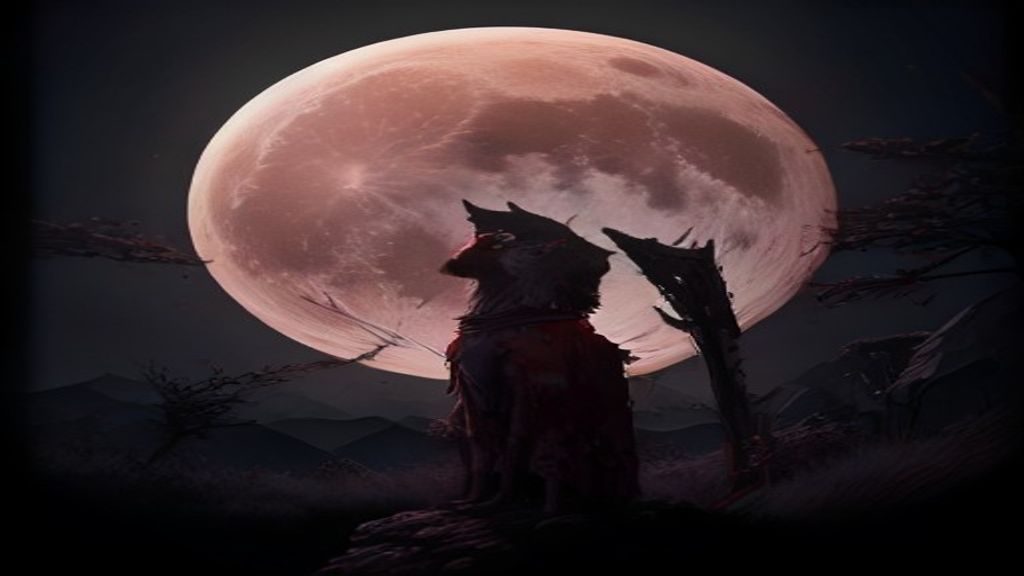
On the night of August 27‑28, 2026, sky‑watchers across North America were treated to a striking celestial event: a partial lunar eclipse that turned the Moon a deep, coppery red. The phenomenon, often called a “Blood Moon,” was captured in vivid detail by photographer Philippe Moussette of Saint‑Agapit, Quebec, whose images illustrate both the beauty and the science behind this fleeting transformation.
What Happened
As the Earth moved between the Sun and the Moon, its shadow—known as the umbra—swept across the lunar surface. During this particular eclipse, the Moon passed almost entirely through the umbra, but not enough to become a total eclipse. The portion of the Moon that entered the Earth's shadow took on a reddish hue, a result of sunlight scattering through the planet’s atmosphere and bending toward the lunar surface.
Photographer Philippe Moussette set up his Canon mirrorless camera to capture the event, using a series of exposures ranging from a rapid 1/250 second to a slower ¼ second, all at a wide aperture of f/4 and ISO 800. This blend of short and long exposures allowed him to preserve the fine details of the lunar terrain while also emphasizing the eerie glow that bathed the Moon in a coppery glow.
Key Details
The eclipse began just after sunset, with the Moon rising already tinged in orange. As the night progressed, the shadow deepened, and the Moon’s color intensified to a richer, almost blood‑like shade. Moussette’s technique of stacking multiple exposures helped to balance the bright highlights of the lunar highlands with the darker, shadowed regions, creating a final image that conveys both the stark contrast and the subtle gradations of color.
Technical specifics of the shoot reveal a careful balance: the ISO 800 setting provided enough sensitivity to capture the dimmer parts of the Moon without introducing excessive noise, while the f/4 aperture ensured a shallow depth of field that highlighted the Moon’s surface texture. The range of shutter speeds—from 1/250 second for the bright limb to ¼ second for the darker umbral portion—allowed Moussette to capture the dynamic range of the scene in a single composite.
Background
Lunar eclipses occur when the Sun, Earth, and Moon align closely enough for the Earth to cast its shadow on the Moon. A partial eclipse, like the one in August 2026, happens when only a portion of the Moon enters the umbra, leaving the rest illuminated by direct sunlight. The reddish color is caused by Rayleigh scattering, the same process that makes sunrise and sunset appear red; the Earth's atmosphere filters out shorter blue wavelengths, allowing longer red wavelengths to reach the Moon.
Blood Moons have been recorded throughout history, often inspiring myths and legends. Modern astronomy, however, provides a clear explanation of the phenomenon, turning folklore into an opportunity for public education about our planet’s atmospheric composition and orbital mechanics.
Why It Matters
Beyond its visual splendor, the Blood Moon serves as a natural laboratory for studying Earth’s atmosphere. By analyzing the exact shade of red and its variation across the lunar surface, scientists can infer the presence of aerosols, volcanic ash, or even large-scale pollution events that affect how sunlight is filtered. Each eclipse thus offers a snapshot of atmospheric conditions at a specific moment in time.
Public interest in such events also drives engagement with science. Photographs like Moussette’s, shared across social media and news outlets, spark curiosity and encourage amateur astronomers to look up, fostering a broader appreciation for the interconnectedness of Earth and space.
What Happens Next
The next opportunity to witness a similar Blood Moon will occur during the partial lunar eclipse slated for May 2027, when the Moon will again skim the edge of Earth’s umbra. While the exact hue may differ depending on atmospheric conditions, the underlying mechanics remain the same, offering another chance for photographers and scientists alike to capture and study the event.
In the longer term, astronomers anticipate that advancements in imaging technology and increased collaboration between professional observatories and citizen scientists will yield even more detailed data. Future eclipses may be documented with high‑dynamic‑range sensors and real‑time atmospheric monitoring, deepening our understanding of both lunar and terrestrial processes.
In sum, the August 2026 Blood Moon was more than a pretty picture; it was a reminder of the dynamic relationship between our planet and its satellite. Through careful observation, technical skill, and scientific curiosity, events like this continue to illuminate the subtle forces shaping the night sky.
📖 See Also
📚 Sources & Attribution
- ✓ Astronomy Magazine