Security Council LIVE: Rising tensions in Gaza, West Bank
Security Council LIVE: Rising tensions in Gaza, West Bank
Introduction
The United Nations Security Council convened at 10 a.m. local time on Wednesday to confront a sharp escalation of violence across the Occupied Palestinian Territory. A surge in illegal Israeli settlement activity, renewed attacks in Gaza and the West Bank, and mounting civilian suffering have pushed the region to a new crisis point. The meeting, streamed live on the UN News app, aims to brief members on the latest developments and explore urgent diplomatic steps to prevent further deterioration.
What Happened
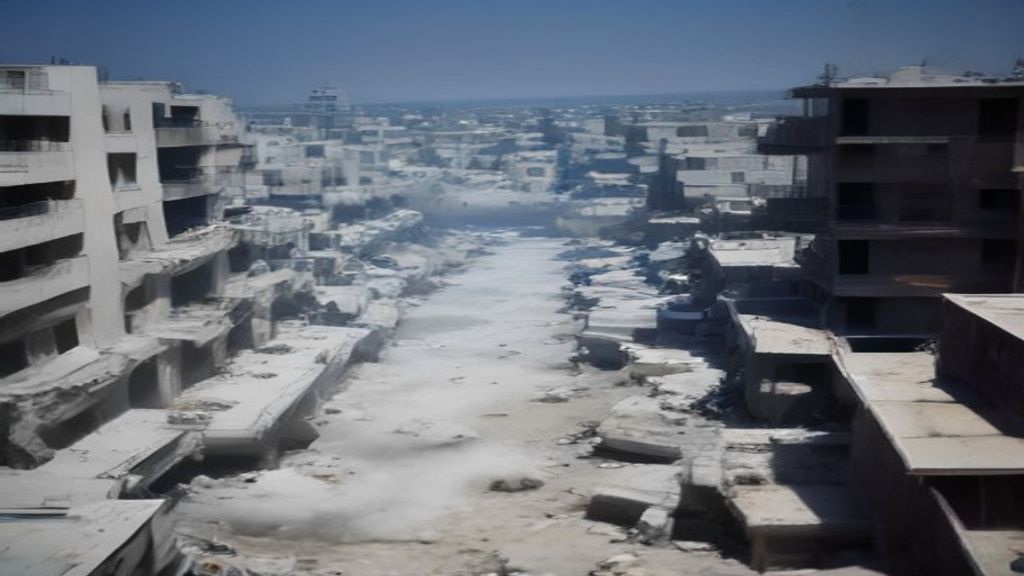
Over the past week, hostilities have intensified on multiple fronts. In Gaza, Israeli airstrikes responded to rocket fire from militant groups, while ground incursions targeted what Israel described as “terrorist infrastructure.” The strikes have caused extensive damage to residential neighborhoods, schools, and health facilities, leaving thousands injured and displacing many more.
Simultaneously, the West Bank has seen a sharp rise in confrontations. Israeli settlers, emboldened by recent government approvals for new outposts, have clashed with Palestinian residents in several villages. These clashes have resulted in injuries, property destruction, and a series of arrests by Israeli forces. The violence has been accompanied by an unprecedented expansion of settlement construction, which the international community continues to deem illegal under international law.
Key Details
The Security Council’s agenda includes briefings from the UN Secretary‑General’s Special Coordinator for the Middle East Peace Process, the UN Office for the Coordination of Humanitarian Affairs (OCHA), and representatives of the Palestinian Authority. They will present up‑to‑date casualty figures, damage assessments, and the status of humanitarian aid corridors, which have been repeatedly disrupted by security incidents.
Specific data points underscore the gravity of the situation: OCHA reports that more than 2,300 civilians have been killed in Gaza since the latest round of fighting began, including over 800 children. In the West Bank, at least 45 Palestinians have been injured in settler‑related violence, while Israeli authorities have reported 12 injuries among settlers during recent clashes. Moreover, satellite imagery released by the UN shows that over 1,200 new housing units have been approved for construction in the occupied territories since the start of the year.
Background
The roots of today’s crisis lie in a protracted conflict that dates back more than a century, but the immediate trigger can be traced to the stalled peace process and the expansion of settlements after the 2005 disengagement from Gaza. The 1967 Six‑Day War placed the West Bank, East Jerusalem, and Gaza under Israeli military occupation, a status that has persisted despite numerous UN resolutions calling for withdrawal and the establishment of a viable Palestinian state.
Since the early 2000s, periodic escalations have erupted, often linked to political developments, settlement activity, or security incidents. The most recent wave follows the failure of renewed negotiations in early 2024, a period marked by increased settlement approvals and a hardening of Israeli security policies, which have together fueled Palestinian frustration and militant retaliation.
Why It Matters
The current flare‑up threatens regional stability far beyond the immediate borders of Israel and the Palestinian territories. Neighboring states, including Egypt, Jordan, and Lebanon, have expressed concern that a broader conflagration could destabilize their own security environments and trigger a wave of refugees. Moreover, the humanitarian crisis in Gaza—characterized by shortages of water, electricity, and medical supplies—poses a severe risk of a public‑health disaster that could attract international intervention.
From a diplomatic perspective, the Security Council’s response will test the UN’s ability to act decisively in a deeply polarized arena. A robust, consensus‑based resolution could reaffirm the relevance of international law, particularly the illegality of settlement expansion, and pressure parties toward a ceasefire. Conversely, a weak or veto‑blocked statement could embolden further unilateral actions and erode confidence in multilateral conflict‑resolution mechanisms.
What Happens Next
In the short term, the Council is expected to adopt a presidential statement that condemns the violence, calls for an immediate ceasefire, and urges the reopening of humanitarian corridors. The statement will likely reaffirm the UN’s position on the illegality of settlements and request that all parties respect international humanitarian law. Parallel diplomatic tracks, including back‑channel talks led by the United States, the European Union, and regional actors, will aim to secure a temporary truce.
Long‑term prospects hinge on whether the international community can translate the Council’s language into concrete actions. This may involve renewed sanctions on entities facilitating settlement construction, increased funding for UNRWA and other aid agencies, and a recommitment to a negotiated two‑state solution. The coming weeks will reveal whether the Security Council can move beyond rhetoric to shape a sustainable pathway toward peace.
Conclusion
The emergency Security Council meeting underscores the urgency of addressing the spiralling violence and settlement expansion that threaten both human lives and regional stability. While the immediate goal is to halt the current bloodshed, the broader challenge remains: to revive a stalled peace process and enforce international norms that have long been ignored. The world’s eyes are on the Council’s next steps, and the outcome will have lasting implications for the future of Gaza, the West Bank, and the wider Middle East.
📖 See Also
📚 Sources & Attribution
- ✓ UN News