North Korea claims cruise missile test with dispersal warhead
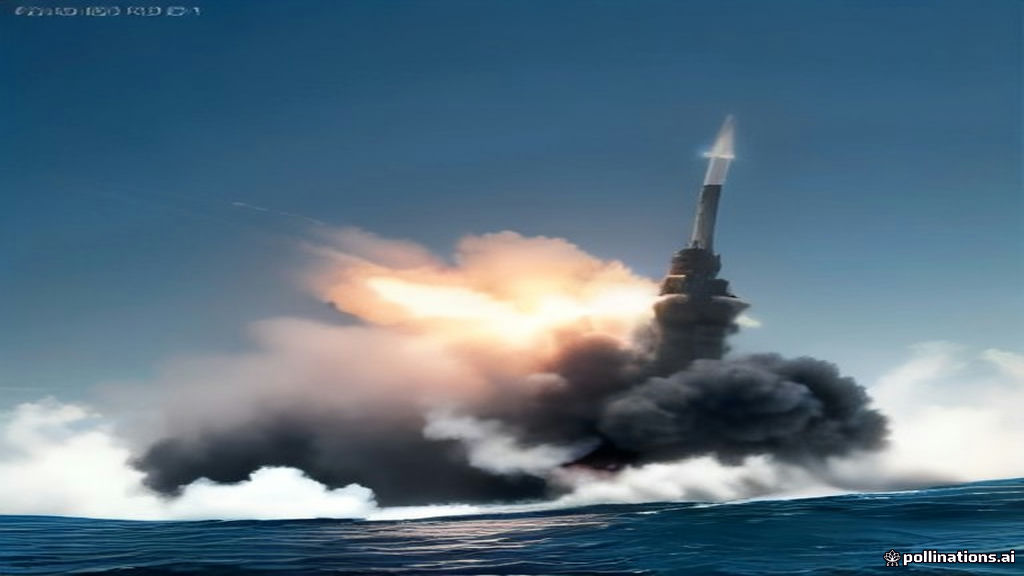
North Korea announced a new missile test that it describes as a “strategic cruise missile equipped with a dispersal warhead,” claiming the weapon can strike targets from a vertical launch posture. The statement, released by the Korean Central News Agency (KCNA), underscores Pyongyang’s continued focus on expanding its long‑range strike capabilities amid heightened regional tensions.
What Happened
On the morning of 2 November, North Korean state media reported that the Korean People’s Army (KPA) conducted a flight test of a cruise missile fitted with a dispersal warhead. According to KCNA, the missile was launched from a fixed site, flew a predetermined trajectory, and successfully demonstrated the ability to release sub‑munitions over a target area.
The test also included a “vertical strike” assessment, meaning the missile was evaluated for its capacity to engage targets from a steep, near‑vertical approach. Officials claim the trial validated both the missile’s range and the warhead’s ability to scatter numerous smaller explosives, a configuration designed to increase damage against dispersed or fortified installations.
Key Details
While the exact model of the cruise missile was not disclosed, analysts suspect it is a modified version of the KN‑23 or the newer KN‑24, both of which have been featured in previous North Korean tests. The dispersal warhead is believed to contain dozens of sub‑munitions, potentially enabling the missile to cover a wide area and complicate missile‑defence interception.
The vertical strike capability suggests a launch profile that could involve a high‑altitude climb followed by a steep descent onto a target, a tactic that can reduce the reaction time of air‑defence systems. The KPA reportedly recorded telemetry data confirming the missile’s stability, guidance accuracy, and successful deployment of the warhead’s dispersal mechanism.
Background
North Korea has steadily advanced its cruise‑missile program over the past decade, moving from short‑range, land‑attack variants to longer‑range, more sophisticated systems capable of evading radar and missile‑defence networks. The KN‑23, often likened to Russia’s Kalibr cruise missile, and the KN‑24, noted for its low‑observable design, have featured in multiple tests since 2020.
The latest test follows a series of high‑profile missile launches earlier this year, including a series of solid‑fuel intermediate‑range ballistic missiles and a submarine‑launched cruise missile. These activities have drawn condemnation from the United Nations and heightened concerns among U.S., South Korean, and Japanese defence planners about the DPRK’s expanding strike envelope.
Why It Matters
Integrating a dispersal warhead onto a cruise missile represents a qualitative leap in Pyongyang’s offensive options. Unlike a single warhead, a cluster‑type payload can overwhelm point‑defence systems, increase the probability of striking hardened or spread‑out targets, and potentially cause civilian casualties if used against populated areas, raising serious humanitarian concerns.
The vertical strike capability further complicates regional defence calculations. Traditional missile‑defence architectures are optimized for predictable, shallow‑angle trajectories; a steep‑angle approach shortens detection windows and may require additional sensors or interceptors, prompting allies to reassess the adequacy of existing shield systems such as THAAD, Patriot, and Aegis.
What Happens Next
In the short term, the United States, South Korea, and Japan are expected to convene emergency consultations within the framework of the U.S.–Japan‑South Korea trilateral security dialogue. Diplomatic channels will likely focus on reaffirming existing sanctions, while military planners may accelerate the deployment of additional missile‑defence assets to vulnerable zones.
Long‑term, the test could influence future negotiations over North Korea’s denuclearisation and weapons‑reduction commitments. If Pyongyang continues to showcase advanced conventional capabilities, it may use them as bargaining chips, seeking relief from economic pressure in exchange for limiting or halting further missile development.
Overall, the reported cruise‑missile test with a dispersal warhead underscores North Korea’s determination to refine its strike portfolio and challenge regional security architectures. As the international community grapples with the technical implications, the episode adds another layer of complexity to an already volatile security environment in East Asia.
📖 See Also
📚 Sources & Attribution
- ✓ Army Technology