Nearly every element in your body except hydrogen was forged by stars—the calcium in your bones and much of the iron in your blood came through ancient supernovae, while the hydrogen flowing through you was born before the first star existed.
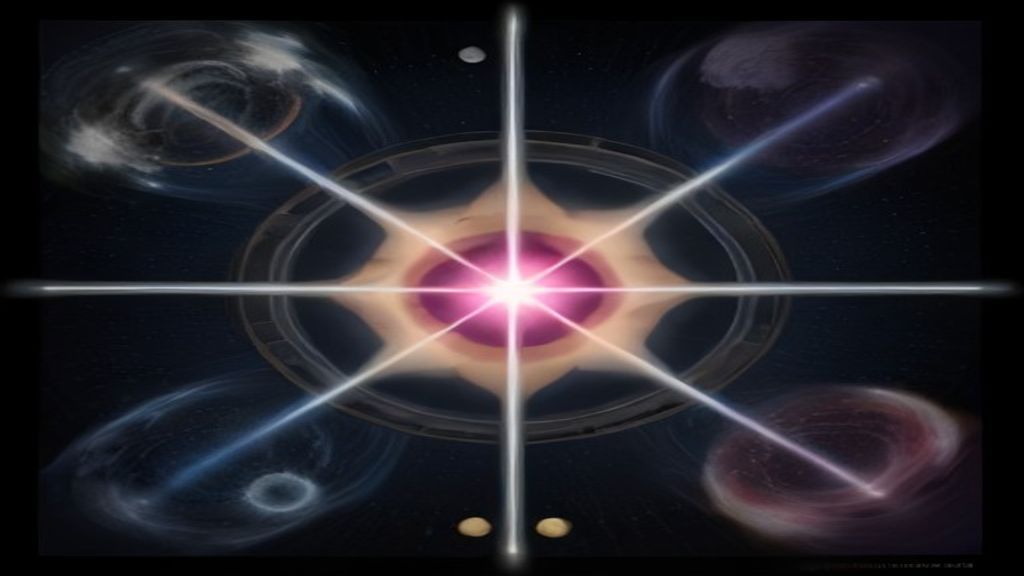
Nearly every element in your body except hydrogen was forged by stars—the calcium in your bones and much of the iron in your blood came through ancient supernovae, while the hydrogen flowing through you was born before the first star existed.
Introduction
When you look at a human hand, you see flesh, bone, blood, and a complex chemistry that sustains life. Yet the atoms that make up that hand have traveled across cosmic time and space. Hydrogen, the lightest and most abundant element in the universe, was created in the first fractions of a second after the Big Bang, long before any star ever ignited. All the other elements—carbon, nitrogen, oxygen, calcium, iron, and the trace metals that enable metabolism—were synthesized inside stars, hurled into space by supernova explosions, and later incorporated into the clouds that formed our solar system. This article follows that extraordinary journey from the primordial fireball to the living body.
What Happened
In the first three minutes after the Big Bang, the universe cooled enough for protons and neutrons to combine, forming the lightest nuclei: hydrogen, helium, and a trace of lithium. No heavier elements existed yet; the cosmos was a simple mixture of these gases. Hundreds of millions of years later, gravity gathered the hydrogen and helium into the first generation of stars (Population III). Inside their cores, nuclear fusion fused hydrogen into helium, and in more massive stars, successive fusion stages built carbon, oxygen, neon, silicon, and finally iron.
When massive stars exhausted their nuclear fuel, they collapsed under their own gravity and exploded as supernovae. These cataclysmic events released a torrent of newly forged elements into the interstellar medium. The shock waves also triggered the formation of new stars and planetary systems, mixing the stellar debris with pristine hydrogen gas. Over billions of years, this cycle of birth, death, and recycling enriched the galaxy with the full periodic table, setting the stage for planets like Earth to acquire the raw materials of life.
Key Details
Human bodies are about 60 % oxygen, 20 % carbon, 10 % hydrogen, 9 % nitrogen, and 1 % calcium, with iron, phosphorus, potassium, sulfur, and trace metals making up the remainder. Calcium, essential for bone strength, is produced in the late stages of massive stars through the triple‑alpha process and subsequent alpha captures. Iron, the core of hemoglobin, is created during the final silicon‑burning phase and expelled in Type II supernovae. Even the potassium that regulates nerve impulses and the sodium that balances fluids were forged in stellar interiors and spread by stellar winds and explosions.
Isotopic studies of meteorites reveal that the solar system formed from a cloud enriched by at least one nearby supernova about 4.6 billion years ago. The same cloud contained the hydrogen that would later become the water in our bodies, a relic of the Big Bang itself. Thus, each breath you take contains atoms that have never been inside a star, while the rest of your mass is literally stardust.
Background
The field of nucleosynthesis—first articulated by Fred Hoyle in the 1950s—explains how elements are built up in stars. Laboratory measurements of nuclear reaction rates, combined with observations of stellar spectra and supernova remnants, allow astrophysicists to model the production of each element. Advances in spectroscopy have confirmed that ancient stars in the Milky Way halo contain very low iron but relatively higher carbon, matching predictions that early generations of stars produced light elements before iron became abundant.
Cosmologists also use the cosmic microwave background and the observed abundances of hydrogen, helium, and lithium to test the Big Bang model. The agreement between theory and observation for these light elements is one of the strongest pillars of modern cosmology, while the heavier elements serve as a complementary record of stellar evolution and galactic chemical enrichment.
Why It Matters
Understanding that our bodies are composed of material forged in distant stars reshapes our perspective on humanity’s place in the universe. It underscores a profound unity: the same physical laws that govern supernova explosions also dictate the chemistry of our cells. This realization can inspire a sense of stewardship for the planet, recognizing that the elements we depend on are finite and have a cosmic origin story worth preserving.
Beyond philosophy, the study of stellar nucleosynthesis informs practical science. Knowing the distribution of elements in the galaxy helps astronomers identify regions where planet formation is likely, guides the search for exoplanets with Earth‑like compositions, and even aids in the development of nuclear technologies on Earth by providing natural laboratories of extreme physics.
What Happens Next
Future telescopes such as the James Webb Space Telescope and the Extremely Large Telescope will probe the chemical makeup of the earliest galaxies, refining our timeline of when essential elements like carbon and oxygen became widespread. Meanwhile, laboratory experiments in nuclear physics aim to measure reaction rates with unprecedented precision, reducing uncertainties in stellar models.
In parallel, astrobiology seeks to answer whether life elsewhere shares the same elemental foundation. If we discover organisms on other worlds that also rely on carbon, nitrogen, oxygen, and iron, it would reinforce the idea that the universe’s stellar alchemy universally seeds life. Conversely, finding life with a different chemistry could expand our understanding of how diverse the outcomes of stellar nucleosynthesis can be.
Conclusion
The atoms that make up your bones, blood, and breath have traveled an epic journey from the first moments of the universe to the heart of a dying star, and finally to the planet that nurtures you. Hydrogen, the primordial relic, predates any star, while every other element in your body is the product of countless cycles of stellar birth, fusion, and explosive death. Recognizing this cosmic heritage not only deepens our appreciation for the natural world but also connects the study of the heavens with the very biology that defines us. As science continues to unravel the details of stellar alchemy, we will gain ever clearer insight into the shared origins of matter, energy, and life itself.
📖 See Also
📚 Sources & Attribution
- ✓ Space Daily