NASA Experimental Mars Helicopter Blade Designs Target Longer Flights
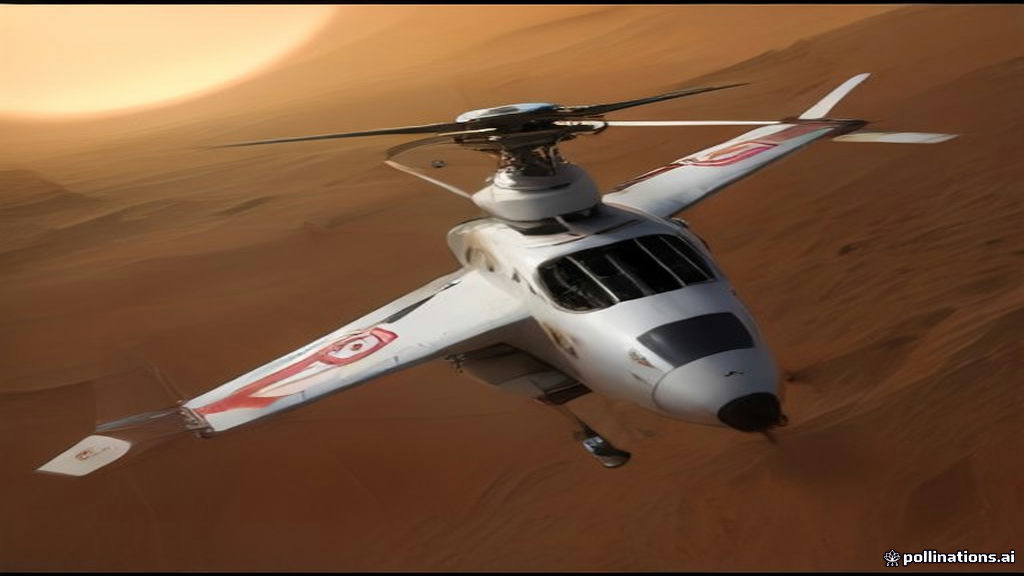
NASA’s Ingenuity helicopter proved that powered flight is possible on Mars, but the mission was only a stepping stone. Engineers are now redesigning the rotor blades that could let future Mars helicopters soar higher, travel farther, and carry scientific payloads. By combining high‑fidelity computer simulations with wind‑tunnel experiments that replicate the thin Martian atmosphere, researchers are shaping a new generation of aerial platforms that could dramatically expand the scope of planetary exploration.
What Happened
In a series of recent tests, NASA’s Langley Research Center and the Jet Propulsion Laboratory (JPL) evaluated several novel blade concepts aimed at improving lift and efficiency under Martian conditions. The team used a custom wind tunnel capable of reproducing the planet’s low air density—about 1% of Earth’s sea‑level atmosphere—and ran each design through a battery of performance metrics, including thrust generation, vibration characteristics, and power consumption.
Simultaneously, engineers ran high‑resolution computational fluid dynamics (CFD) models that allowed them to visualize airflow over the rotating blades at speeds up to 2,400 revolutions per minute. These simulations revealed subtle aerodynamic phenomena, such as leading‑edge vortex formation, that can be harnessed to boost lift without demanding additional power—a critical advantage given the limited energy budget of solar‑powered Martian aircraft.
Key Details
The most promising design features a slightly longer blade span—up to 1.5 meters compared with Ingenuity’s 1.2 meters—and a refined airfoil shape with a higher camber near the root, tapering toward a thinner tip. This geometry reduces induced drag while maintaining structural integrity. Materials testing showed that a carbon‑fiber composite reinforced with a thin layer of aluminum alloy can survive the extreme temperature swings on Mars, from -125°C at night to 20°C during the day, without warping or losing stiffness.
Power analysis indicated that the new blades could achieve a 30% increase in lift-to-drag ratio, translating to roughly 10 extra minutes of flight time per solar charging cycle. That extra endurance could enable a helicopter to climb to altitudes of 30 meters—double Ingenuity’s maximum—and traverse distances of up to 2 kilometers on a single sortie, opening up previously inaccessible terrain such as deep crater walls and steep canyon floors.
Background
Ingenuity’s historic 2021 flight demonstrated that rotorcraft can operate in an environment where the atmosphere is so thin that a helicopter on Earth would be unable to generate any lift. The success hinged on ultra‑lightweight construction, high‑speed rotors, and a simple, rugged design optimized for short, low‑altitude hops. While Ingenuity has exceeded expectations, its primary purpose was a technology demonstrator, not a scientific workhorse.
Future missions, such as the proposed Mars Sample Return and the upcoming Mars Ice Mapper, could benefit from aerial platforms that act as scouts or transporters for surface assets. However, extending flight duration and range requires overcoming the same aerodynamic challenges that limited Ingenuity, prompting NASA to revisit the fundamental blade design with modern tools and materials unavailable a decade ago.
Why It Matters
Longer‑range helicopters would dramatically increase the scientific return of Mars missions. By flying over diverse geological formations, a rotorcraft could map mineral compositions, detect subsurface ice, and identify optimal landing sites for rovers or landers—all without the need for costly orbital passes or extensive ground traversal. The ability to hover for extended periods also enables detailed, high‑resolution imaging of dynamic phenomena such as dust devils or seasonal frost changes.
Beyond Mars, the research feeds into broader aerospace ambitions. Understanding how to generate lift in low‑density atmospheres informs the design of aircraft for other worlds, including Titan, where a thick nitrogen atmosphere offers different challenges, and even for future missions to the Moon’s exosphere, where ultra‑light propulsion concepts may be required.
What Happens Next
The next phase involves integrating the refined blades into a full‑scale prototype helicopter, slated for testing later this year in the same low‑pressure wind tunnel. Engineers will assess real‑world performance, focusing on control algorithms that must adapt to the altered aerodynamic response. If the prototype meets its targets, NASA plans to include the design in the payload of the upcoming Mars 2028 mission, which aims to deliver a multi‑instrument science suite to a region of the planet never before explored by a rover.
Parallel to hardware development, the team is expanding its simulation library to cover a broader range of Martian weather conditions, such as dust storms and seasonal pressure variations. By creating a comprehensive digital twin of the helicopter’s flight envelope, mission planners can optimize flight paths and energy budgets well before the craft ever leaves Earth, reducing risk and maximizing scientific yield.
Conclusion
📖 See Also
📚 Sources & Attribution
- ✓ NASA News