Modern humans interbred with Neanderthals before they disappeared, and most people of non-African ancestry still carry roughly 1 to 4 percent Neanderthal DNA today — meaning part of the human population we once thought we simply replaced never actually vanished
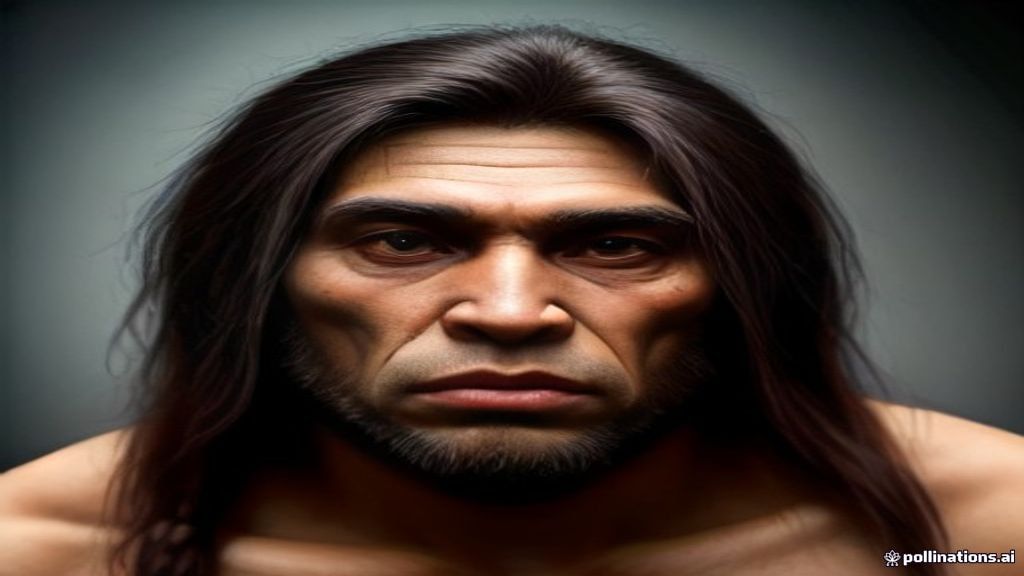
When the first modern humans left Africa around 70,000 years ago, they encountered a close relative already living across Europe and western Asia: the Neanderthals. For decades, fossils suggested a simple story of competition and replacement, but the DNA extracted from ancient bones tells a far richer tale. Today, most people of non‑African descent carry between one and four percent Neanderthal DNA, a living reminder that our ancestors did not merely push another species to extinction—they also shared genes with them.
What Happened
Genomic analyses of Neanderthal remains, first published in 2010, revealed that modern Eurasians possess small but significant fragments of Neanderthal DNA. These segments are not random; they appear in clusters that match the length and distribution expected from interbreeding events that occurred roughly 50,000 to 60,000 years ago, shortly after modern humans entered the continent. The mixing was likely limited to a few generations of contact, after which the two groups diverged again, leaving a genetic legacy that has persisted through millennia.
Further studies have identified multiple waves of admixture. Some populations, such as East Asians, tend to carry slightly higher percentages of Neanderthal DNA than Europeans, suggesting that after the initial contact, later groups may have encountered additional, perhaps isolated, Neanderthal communities. The overall picture is one of a “leaky” replacement: modern humans largely supplanted Neanderthals, yet not without leaving a genetic imprint.
Key Details
Specific genes inherited from Neanderthals have been linked to traits that affect modern health and biology. For example, certain immune system alleles that improve the response to viral infections appear to be of Neanderthal origin, offering a possible advantage in the pathogen‑rich environments early humans faced. Conversely, some Neanderthal‑derived variants are associated with increased susceptibility to conditions such as type‑2 diabetes, depression, and even nicotine addiction, illustrating a complex balance of benefits and drawbacks.
Geographically, the distribution of Neanderthal DNA is uneven. Populations in Oceania and sub‑Saharan Africa have virtually no Neanderthal ancestry, while those in South Asia, the Middle East, and the Americas show intermediate levels. This pattern mirrors ancient migration routes and the timing of when different groups encountered Neanderthal populations, reinforcing the idea that interbreeding was a localized, episodic phenomenon rather than a continent‑wide event.
Background
Neanderthals (Homo neanderthalensis) first appeared in the fossil record about 400,000 years ago and thrived across Europe and western Asia until roughly 40,000 years ago. Their robust build, large cranial capacity, and sophisticated tool use suggest they were well adapted to cold climates. Modern humans (Homo sapiens), emerging in Africa around 300,000 years ago, gradually spread outward, eventually meeting Neanderthals in overlapping territories.
Traditional paleoanthropology relied heavily on skeletal remains, which painted a picture of direct competition and eventual replacement. The breakthrough came when scientists succeeded in sequencing the Neanderthal genome from a 38,000‑year‑old bone found in Croatia. This genetic breakthrough opened a new window onto the past, allowing researchers to compare ancient and modern genomes directly and uncover the hidden threads of interbreeding.
Why It Matters
Understanding the extent of Neanderthal introgression reshapes our view of human evolution from a linear replacement model to a network of interactions. It underscores that species boundaries can be porous, especially when populations are small and environmental pressures are intense. This insight has broader implications for how we think about the evolution of other hominins, such as Denisovans, and even for contemporary discussions about genetic diversity and adaptation.
From a medical perspective, the Neanderthal legacy is a double‑edged sword. While some inherited alleles boost immunity, others predispose individuals to disease. Recognizing which health‑related traits are of Neanderthal origin can improve personalized medicine, helping clinicians anticipate risk factors that are rooted deep in our evolutionary past.
What Happens Next
Future research will likely focus on refining the timeline and geographic scope of interbreeding events. Advances in ancient DNA extraction and sequencing technologies are making it possible to recover genetic material from older and more degraded specimens, potentially revealing whether interbreeding occurred earlier than currently thought or involved additional, as‑yet‑undiscovered hominin groups.
Beyond the lab, public interest in our Neanderthal heritage is growing, prompting discussions about identity, ancestry, and what it means to be “human.” As more people learn that a small fraction of their genome comes from a species that vanished tens of thousands of years ago, the narrative shifts from one of conquest to one of shared history—a reminder that our species’ story is woven together with many threads, some of which are still being uncovered.
In the end, the presence of Neanderthal DNA in modern populations is a testament to the complexity of our past. It tells us that extinction does not always erase a lineage entirely; sometimes, the remnants survive within us, influencing who we are today and how we will continue to evolve.
📖 See Also
📚 Sources & Attribution
- ✓ Space Daily