If Waymo cars are Level 4 automation, what does it take to be a Level 5?
Introduction
The race to fully autonomous vehicles has captured the imagination of technologists, investors, and everyday drivers alike. Waymo, Alphabet’s self‑driving subsidiary, has already demonstrated Level 4 automation—vehicles that can handle most driving tasks within a defined operational design domain (ODD) without human input. Yet the industry’s ultimate milestone remains Level 5, a system that can drive anywhere, under any conditions, without any driver. This article unpacks the SAE automation levels, examines why Level 5 is so elusive, and outlines the technical, regulatory, and societal hurdles that must be cleared before cars truly become driver‑less everywhere.What Happened
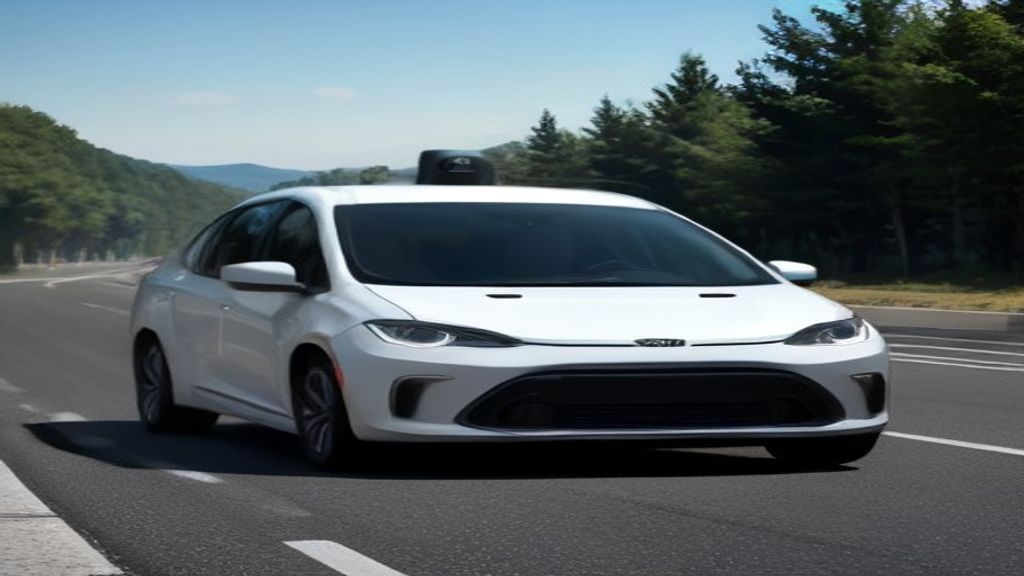
Waymo began its public road testing in 2015, gradually expanding from limited geofenced zones in Phoenix to broader deployments across multiple U.S. cities. Its fleet now operates in a Level 4 capacity: within mapped urban districts, the cars navigate intersections, obey traffic signals, and respond to other road users without a safety driver. However, when the vehicle exits its pre‑mapped “bubble,” a human must take over, highlighting the boundary between high automation and full autonomy.
The distinction between Level 4 and Level 5 is codified by the Society of Automotive Engineers (SAE). Level 4 systems are “high automation”—they can perform all driving functions in certain conditions but still require a fallback driver for unanticipated scenarios. Level 5, termed “full automation,” removes that fallback entirely, demanding a vehicle that can understand and react to any road environment, weather pattern, or unexpected obstacle without human assistance.
Key Details
Achieving Level 5 demands breakthroughs across three core domains: perception, decision‑making, and actuation. Perception relies on a suite of sensors—cameras, radar, and lidar—to create a real‑time 3D model of the surroundings. Current sensors struggle with edge cases: lidar’s laser beams can be scattered by heavy rain or fog, cameras can be blinded by glare, and radar may miss small, fast‑moving objects like a child darting into the street. Researchers are therefore pursuing solid‑state lidar with higher resolution, multimodal sensor fusion algorithms, and even emerging technologies such as radar‑camera hybrids that can compensate for each other’s blind spots.
Beyond raw data, the vehicle must interpret that data using advanced artificial intelligence. Machine‑learning models need to generalize from millions of miles of training data to novel situations—think construction zones with temporary signage or a sudden road closure. This requires not only larger, more diverse datasets but also new architectures that can reason about intent, predict the behavior of pedestrians and cyclists, and make ethical decisions in split‑second crash scenarios.
Finally, actuation systems must translate decisions into safe vehicle control under all conditions. This includes robust braking and steering mechanisms that can function in extreme temperatures, on icy roads, or on uneven terrain. Redundancy is critical: multiple independent pathways for braking, steering, and power ensure that a single component failure does not compromise safety.
Background
The quest for autonomous driving traces back to the 1980s, when early experiments in computer vision and robotics laid the groundwork for modern perception systems. The 2000s saw a surge in computational power and the advent of affordable sensors, enabling projects like DARPA’s Grand Challenge to demonstrate that vehicles could navigate off‑road courses without human input. Google’s 2009 acquisition of the Carnegie Mellon self‑driving car project marked a turning point, leading to the formation of Waymo and the first large‑scale public road tests.
Since then, the industry has coalesced around the SAE J3016 taxonomy, which standardizes six levels of automation. While Level 2 (partial automation) is now common in consumer vehicles—think adaptive cruise control and lane‑keeping assist—Level 3 (conditional automation) remains rare due to liability concerns. Level 4 deployments, such as Waymo’s robo‑taxis, operate within tightly controlled ODDs, whereas Level 5 remains a research frontier, with only a handful of prototype demonstrations in highly controlled environments.
Why It Matters
Full automation promises transformative societal benefits. By eliminating human error—the cause of over 90 % of crashes—Level 5 vehicles could dramatically improve road safety. Moreover, they could optimize traffic flow through coordinated platooning and real‑time routing, reducing congestion, emissions, and fuel consumption. For populations that are currently underserved by personal transportation—elderly individuals, people with disabilities, and residents of transit‑poor areas—Level 5 could provide unprecedented mobility independence.
Economic implications are equally profound. Autonomous logistics could lower freight costs, reshape supply chains, and create new business models such as on‑demand autonomous shuttles. However, these gains hinge on overcoming the technical barriers that currently confine autonomy to limited domains. Without Level 5, the promised efficiency gains will remain fragmented, and the broader societal shift toward shared, driver‑less mobility will be delayed.
What Happens Next
In the short term, we will see an expansion of Level 4 services. Waymo, Cruise, and other players are scaling their geofenced fleets, refining sensor suites, and gathering the massive datasets needed to train more generalized AI models. Simultaneously, regulators are drafting frameworks for safety validation, data sharing, and liability that will eventually accommodate Level 5 operations.
Long‑term progress will depend on coordinated advances: breakthroughs in sensor physics that deliver all‑weather perception, AI that can reason like a human driver across any scenario, and robust, fail‑safe vehicle architectures. Public‑private partnerships, standardized testing protocols, and transparent reporting will be essential to build trust and accelerate deployment. When these pieces finally align, Level 5 vehicles will move from prototype labs onto every street, fulfilling the original promise of truly driver‑less transportation.
Conclusion
Reaching Level 5 automation is far more than a software upgrade; it requires a holistic evolution of perception hardware, intelligent decision‑making, and resilient actuation, all validated within a supportive regulatory ecosystem. Waymo’s Level 4 achievements demonstrate that high‑automation is possible, but they also illuminate the remaining gaps—especially the ability to handle the infinite variability of the real world without human fallback. As sensor technology matures, AI becomes more adaptable, and industry standards solidify, the path to full autonomy will become clearer. The journey is arduous, but the potential rewards—safer roads, greener travel, and universal mobility—make the pursuit of Level 5 a defining challenge of this decade.📖 See Also
- Does Greg Abel Know Something Wall Street Doesn't? New Berkshire Hathaway CEO Doubles Down On a Legacy Department Store Stock With a 3.3% Dividend Yield
- Magnitude 6.1 quake shakes Indonesia near South Nias
- Extradited Navy offficer, accused of fuel-trafficking, arrives from Argentina to Mexico’s top security prison
📚 Sources & Attribution
- ✓ Engadget