Europe’s Solar Problem Is No Longer Solar
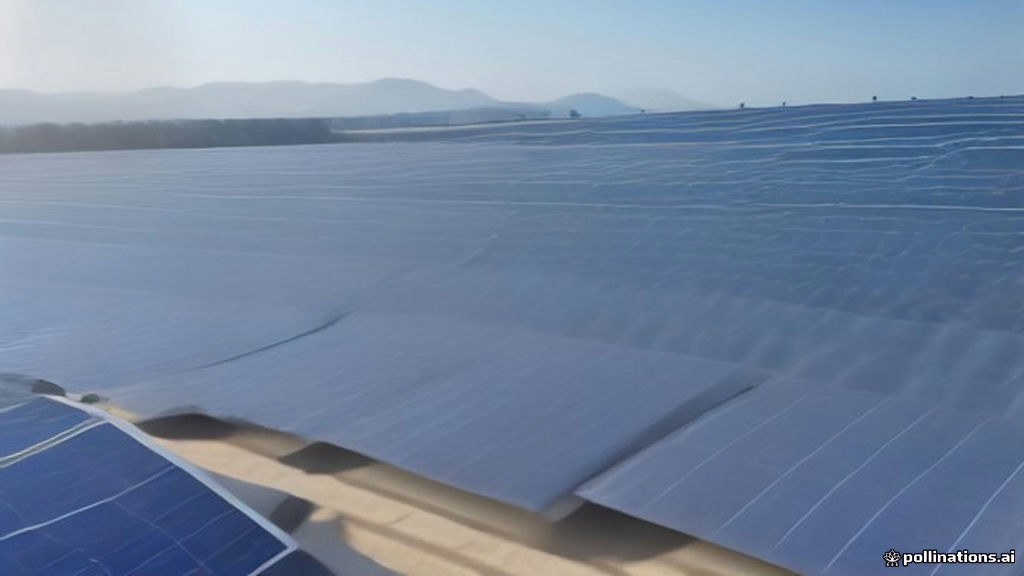
Europe’s solar fleet has finally become a decisive source of power, feeding megawatts into national grids and shaving billions off electricity bills. Yet the sector now faces a paradox: the technology is thriving, while the regulatory, grid‑infrastructure and market‑design frameworks that should enable its growth are lagging behind. The result is a “solar problem” that is no longer about the panels themselves, but about the rules, wires and flexibility mechanisms that surround them.
📊 Key Facts At A Glance
- → [continued] The post Europe’s Solar Problem Is No Longer Solar appeared first on CleanTechnica
What Happened
In the first half of 2024, SolarPower Europe reported that solar capacity in the EU surpassed 200 GW, enough to power roughly 150 million homes. This rapid build‑out has delivered tangible benefits—lower wholesale prices, reduced reliance on imported gas, and a measurable boost to energy security during a year of geopolitical tension.
At the same time, policymakers in several member states began scaling back subsidies and tightening auction rules, arguing that the market had matured enough to stand on its own. The European Commission’s latest “Fit for 55” package, while ambitious on emissions, left the detailed design of solar support mechanisms to national governments, creating a patchwork of incentives that varies dramatically across borders.
Compounding the policy shift, grid operators report increasing instances of curtailment, where solar farms are forced to switch off because the transmission network cannot absorb the electricity. In Germany, for example, curtailment rose to 5 % of total solar output in the summer months—an amount that translates into lost revenue for developers and a missed opportunity for the system as a whole.
Key Details
One of the most pressing technical bottlenecks is the lack of sufficient “flexibility” resources. Solar generation is intermittent, and without adequate storage, demand‑response or inter‑connector capacity, the system struggles to balance supply and demand in real time. Battery installations in the EU grew by 30 % YoY in 2023, yet they still cover less than 2 % of total solar capacity, far short of the 10‑15 % target set by the European Green Deal.
Investment frameworks are also out of sync with the speed of deployment. Many national renewable‑energy action plans still rely on long‑term power purchase agreements (PPAs) that were designed for fossil‑fuel projects, making it difficult for solar developers to secure financing under the new, faster‑moving market conditions. The result is a widening gap between the capital needed for grid reinforcement—estimated at €120 billion by 2030—and the funds currently earmarked.
Regulatory uncertainty adds another layer of risk. The EU’s Renewable Energy Directive (RED II) is set to be replaced by RED III, but the timeline for the new framework remains vague. Without clear rules on issues such as priority dispatch, net‑metering, and cross‑border capacity allocation, investors are hesitant to commit to large‑scale projects that require coordinated planning across multiple jurisdictions.
Background
The European Union entered the 2020s with a bold target: at least 40 % of its electricity should come from renewables by 2030, with solar expected to contribute roughly one‑third of that share. Early policy tools—feed‑in tariffs, guaranteed tariffs, and generous auction premiums—catalysed a wave of installations, especially in southern Europe where solar irradiance is highest.
However, the rapid scale‑up exposed structural weaknesses. Many transmission networks were built for a centralized, fossil‑fuel‑dominated system and lack the digital monitoring and dynamic routing capabilities required for high shares of distributed generation. Moreover, the COVID‑19 pandemic and the war in Ukraine forced governments to re‑evaluate energy‑security priorities, leading to a shift from long‑term subsidy schemes toward market‑based solutions that have not yet been fully fleshed out.
Why It Matters
Energy security is at stake. As Europe seeks to wean itself off Russian gas, solar power offers a domestically produced, low‑carbon alternative. Every megawatt‑hour of solar that replaces gas reduces exposure to volatile import prices and geopolitical risk. If grid constraints continue to force curtailment, the continent will miss out on a cheap, clean resource precisely when it needs it most.
The climate agenda also hangs in the balance. The EU’s 2030 emissions reduction goal of at least 55 % depends heavily on hitting solar deployment milestones. Delays in grid upgrades and market reforms could push the continent off its pathway, jeopardising the broader ambition of net‑zero by 2050 and undermining the credibility of Europe’s climate leadership on the global stage.
What Happens Next
Policymakers are beginning to respond. The European Commission has proposed a “Grid of the Future” roadmap, calling for €600 billion of investment in transmission and distribution upgrades by 2030, with a focus on digitalisation, cross‑border capacity and “smart” flexibility services. Simultaneously, several member states are revising their auction designs to include explicit “flexibility” criteria, rewarding projects that pair solar with storage or demand‑response capabilities.
Industry groups are also pushing for a unified market framework. SolarPower Europe and the European Transmission System Operators Association (ENTSO‑E) have jointly drafted a set of guidelines for “priority dispatch” and “capacity allocation” that would standardise how solar output is integrated across borders. If adopted, these measures could reduce curtailment, lower financing costs and restore investor confidence, paving the way for the next wave of solar installations.
In short, Europe’s solar sector has outgrown the policy and infrastructure that birthed it. The challenge now is to redesign the surrounding ecosystem so that the continent can fully harvest the clean, affordable power that its panels are already producing. The stakes are high, but the solutions are within reach—provided governments, grid operators and industry act in concert and move quickly.
📖 See Also
📚 Sources & Attribution
- ✓ CleanTechnica News