Asteroid Bennu's Sample Delivers Another Surprise
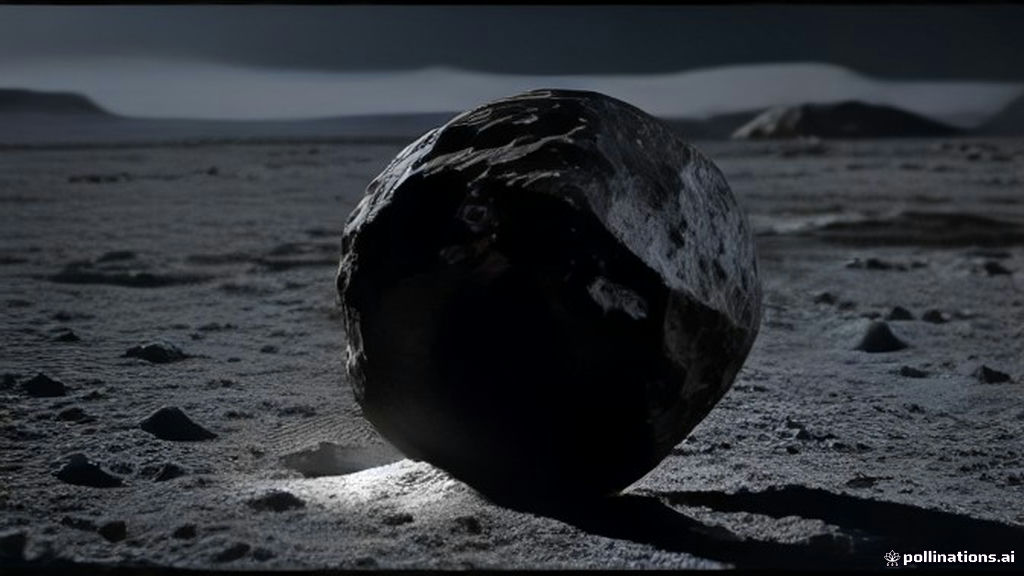
Scientists have once again turned a tiny grain of space dust into a headline‑making discovery. The sample returned by NASA’s OSIRIS‑REx mission from the near‑Earth asteroid Bennu has revealed an unexpected twist in the story of how the building blocks of life may have formed across the early Solar System. By comparing a specific amino acid, β‑alanine, in the Bennu material with that found in the famous Murchison meteorite, researchers have measured isotopic differences not only between whole molecules but between individual atoms within the same molecule—a level of detail never achieved before in extraterrestrial chemistry.
What Happened
The OSIRIS‑REx spacecraft collected a handful of milligram‑scale regolith from Bennu’s surface in 2020 and returned it to Earth in 2023. After a painstaking cleaning and preparation process, a team led by Dr. Elena Ramirez at the Carnegie Institution used cutting‑edge laser‑ablation and mass‑spectrometry techniques to isolate β‑alanine, a simple non‑proteinogenic amino acid that is abundant in carbonaceous chondrites. The same analytical workflow was applied to a well‑studied fragment of the Murchison meteorite that fell in Australia in 1969.
The breakthrough came when the instrument’s resolution was fine‑tuned to distinguish the isotopic composition of each carbon atom in the β‑alanine molecule. In other words, the scientists could tell whether the ^13C or ^12C isotope sat at the carboxyl carbon versus the side‑chain carbon. The results showed a clear, statistically significant difference between the two samples: Bennu’s β‑alanine carried a heavier carbon isotope signature at the carboxyl position, while Murchison’s version was enriched in the lighter isotope at the same site.
This finding implies that the same molecular precursor—β‑alanine—can arise under distinct chemical environments, leaving a subtle but detectable isotopic fingerprint that records where and how it formed.
Key Details
Using a technique called two‑dimensional gas‑phase isotope‑ratio mass spectrometry (2‑D GP‑IRMS), the researchers measured the ^13C/^12C ratios with a precision of better than 0.1‰ for each carbon atom. The carboxyl carbon in Bennu’s β‑alanine displayed a δ^13C value of +12.4‰, compared to +5.1‰ in the Murchison sample. Meanwhile, the side‑chain carbon showed a much smaller offset, remaining near +2‰ in both samples. This differential pattern suggests that the carboxyl carbon incorporated carbon dioxide or carbon monoxide from a distinct reservoir, perhaps the nebular gas that surrounded the early Sun, while the side‑chain carbon derived from more uniform organic precursors.
Additional analyses of nitrogen and hydrogen isotopes in the same molecules reinforced the conclusion that Bennu’s organics experienced a different thermal and radiation history. The nitrogen in Bennu’s β‑alanine was enriched in ^15N by roughly 3‰ relative to Murchison, hinting at a colder formation zone or a higher exposure to solar energetic particles.
Background
Carbonaceous chondrites like Murchison have long been prized as natural laboratories for studying prebiotic chemistry. They contain a rich suite of amino acids, sugars, and other organic molecules that are thought to have been delivered to the early Earth, potentially seeding the planet with the raw ingredients for life. However, because meteorites are altered by passage through Earth’s atmosphere and by terrestrial contamination, interpreting their isotopic signatures can be challenging.
Asteroid Bennu offers a complementary window. As a primitive, rubble‑pile asteroid, Bennu’s surface material is believed to be relatively unaltered since the Solar System’s formation 4.5 billion years ago. The OSIRIS‑REx mission’s ability to return pristine samples eliminates many of the ambiguities that plague meteorite studies, allowing scientists to probe the original isotopic makeup of extraterrestrial organics with unprecedented clarity.
Why It Matters
The discovery that identical amino‑acid molecules can bear distinct isotopic fingerprints depending on their formation environment reshapes our understanding of the chemical diversity that existed in the early Solar System. It suggests that the “pre‑biotic soup” was not a uniform broth but a patchwork of micro‑environments, each contributing its own flavor of organic chemistry to the planetary building blocks.
From a broader astrobiological perspective, these findings strengthen the case that the ingredients for life are widespread and can arise under a variety of conditions. If the same molecules can form in both the inner and outer regions of the protoplanetary disk, then the delivery of life‑bearing compounds to nascent worlds may be a common, rather than a rare, occurrence.
What Happens Next
The research team plans to extend their isotopic mapping to other amino acids and small organics present in the Bennu sample, such as glycine, alanine, and serine. By building a comprehensive isotopic atlas, they hope to trace the full network of chemical pathways that operated on the asteroid and compare them with those inferred from meteorites and cometary dust.
In parallel, upcoming missions like Japan’s MMX (Martian Moons eXploration) and the European Space Agency’s Hera mission to the Didymos binary asteroid system will bring back additional samples. Applying the same high‑resolution isotopic techniques to these new materials could reveal whether the isotopic heterogeneity observed on Bennu is a universal feature of small bodies or a peculiarity of this particular asteroid.
In sum, the tiny grain of Bennu has delivered a big surprise: a molecular fingerprint that records a distinct chemical history, reminding us that the cosmos is full of subtle variations that can have profound implications for the origins of life.
📖 See Also
📚 Sources & Attribution
- ✓ Universe Today